
Nearby sites, towns and villages of interest beyond Bjni include:

Arzakan
(2 mi/3.5 km due W – known for their mineral hot springs): there are the large ruins of the 10th-century monastery, Neghutsi Vank, located along a ravine to the northwest of the village. One can also visit the ruins of the 13th-century monastery Ghuki Vank and 13th-century St. Kevork (George) church in the vicinity.
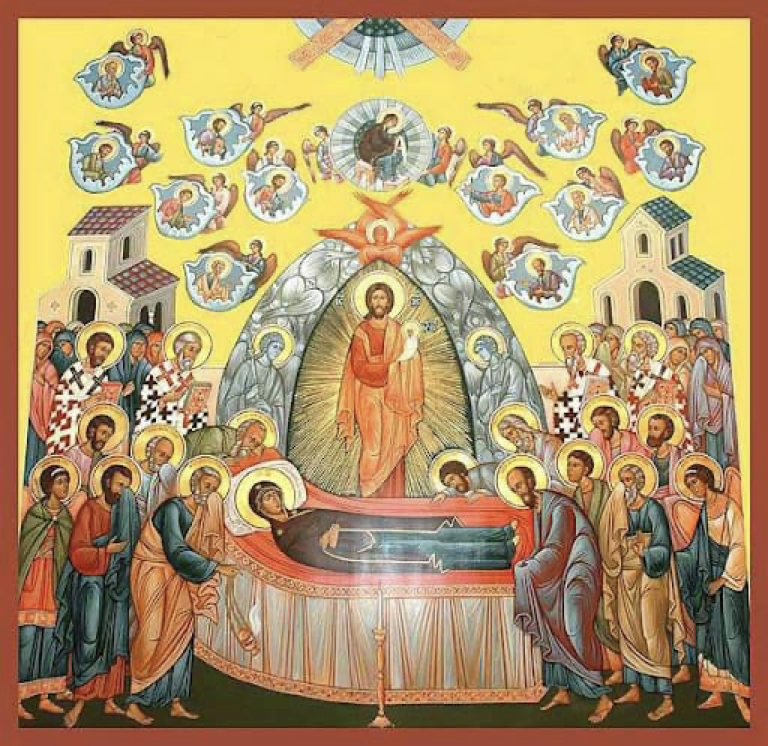
Solag/ Kaghtsi
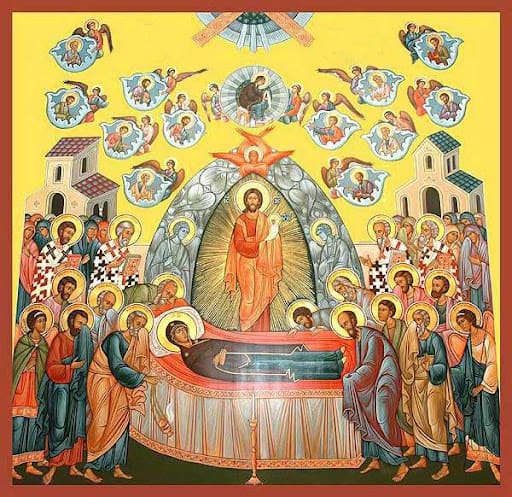
(3 mi/5 km due E – known for St. Mayravank and its mountain spring): in the middle of August, locals make a pilgrimage to the highest mountain in Solag/Kaghtsi to mark the Feast of the Assumption. This Christian holiday marks the bodily taking up of Mary, the mother of Jesus, into Heaven. Villagers break their two-week fasting by preparing harissa (a barley and lamb porridge), khashlama (lamb stew), distributing grapes, and celebrating by building a bonfire and camping out on the mountain overnight. This is an annual summer event. Solag is also the birthplace of the late renowned duduk composer-musician Jivan Gasparyan.
Ask us about our walking tours and hiking excursions to Mayravank.

Aghveran
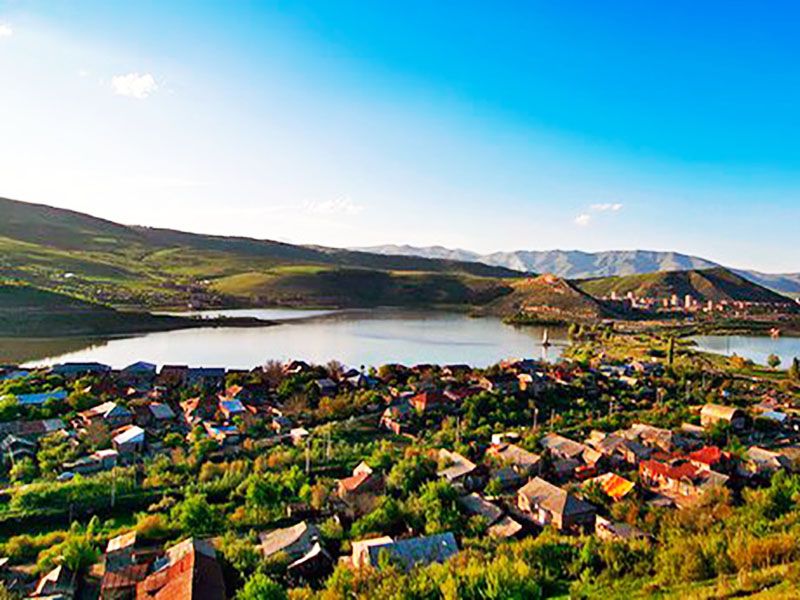
(2.5 mi/5 km due SW): a mountain resort town known for its mineral hot springs; outdoor mineral baths; Teghenik Forest; Aghveran Cultural Center; vacation inns.
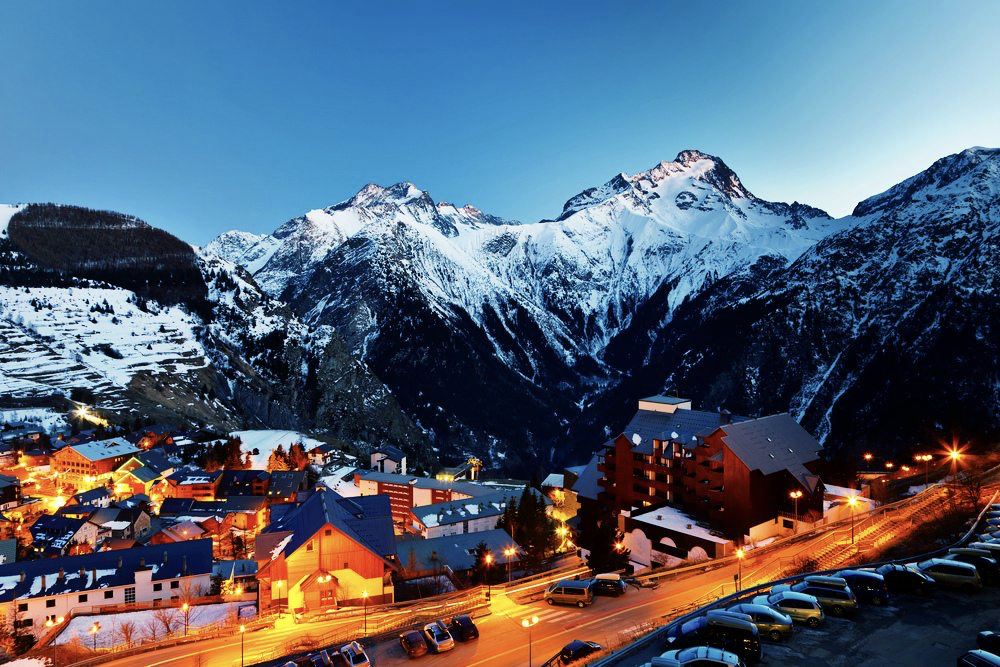
Dzaghgatsor
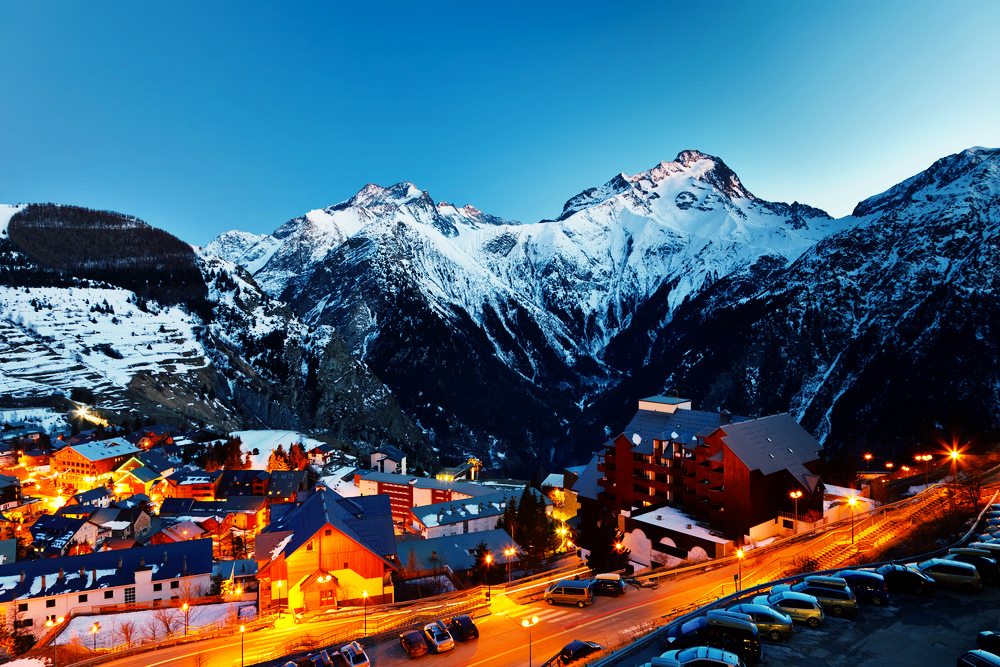
(6.5 mi/10.5 km due NE): considered the number #1 ski, health and leisure tourism spot in Armenia; home of the Kecharis Monastery and many other noted churches; wild forests; inns and restaurants.
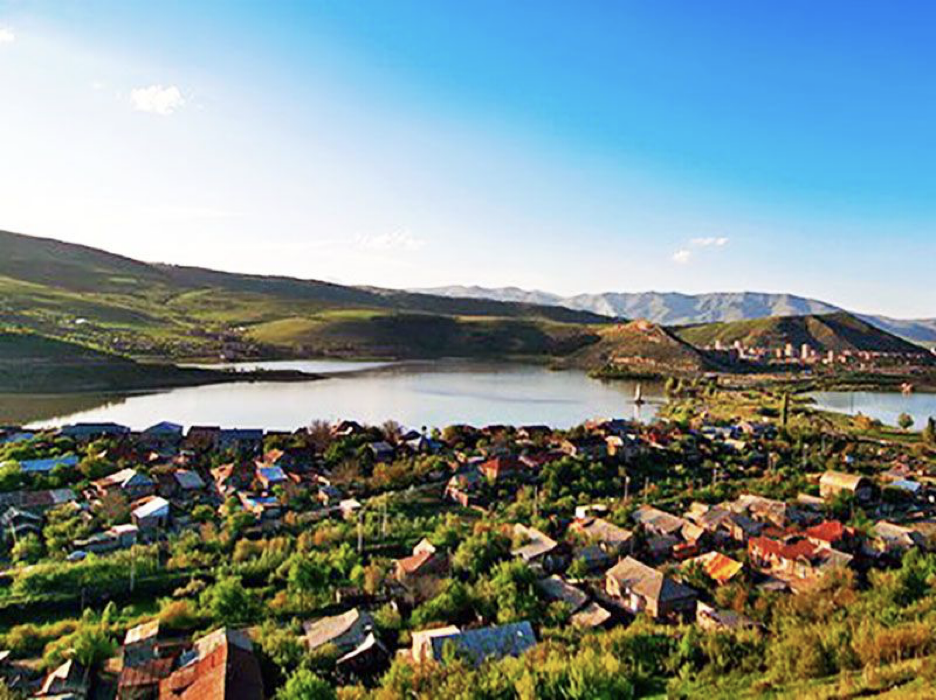
Hrazdan
(6.8 mi/11 km due NE): known for the 10th century Makravank Monastery and many other noted medieval churches and chapels; the Hrazdan branch division of the National Gallery of Armenia; the Hrazdan History Museum; Humanitarian Institute; the Hrazdan Drama Theater; a Zoological and Botanical Garden; hydroelectric and thermal power plants; and shopping malls.
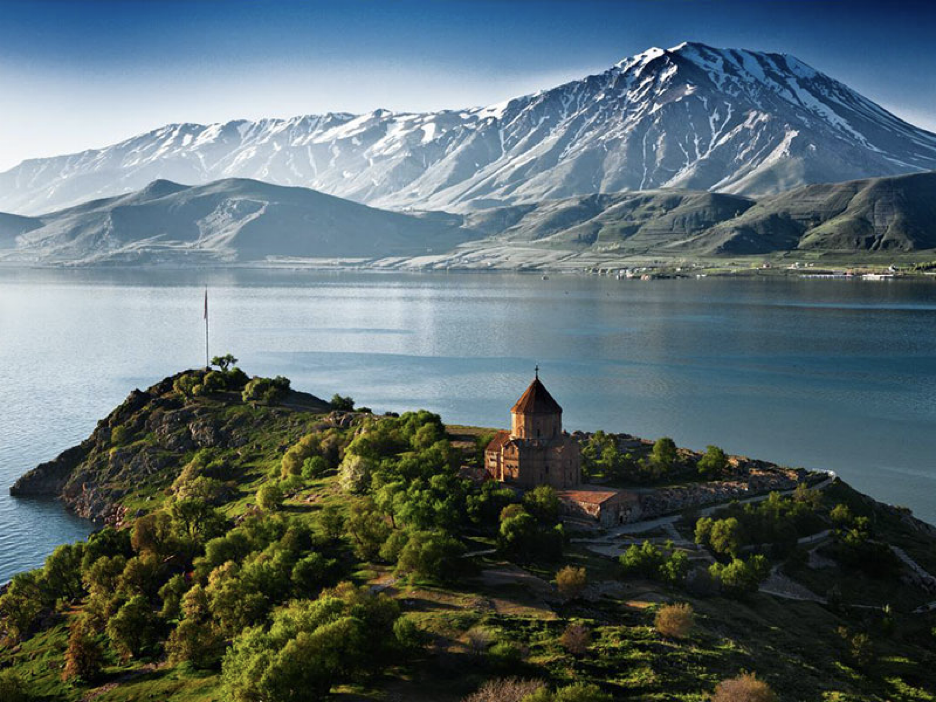
Lake Sevan
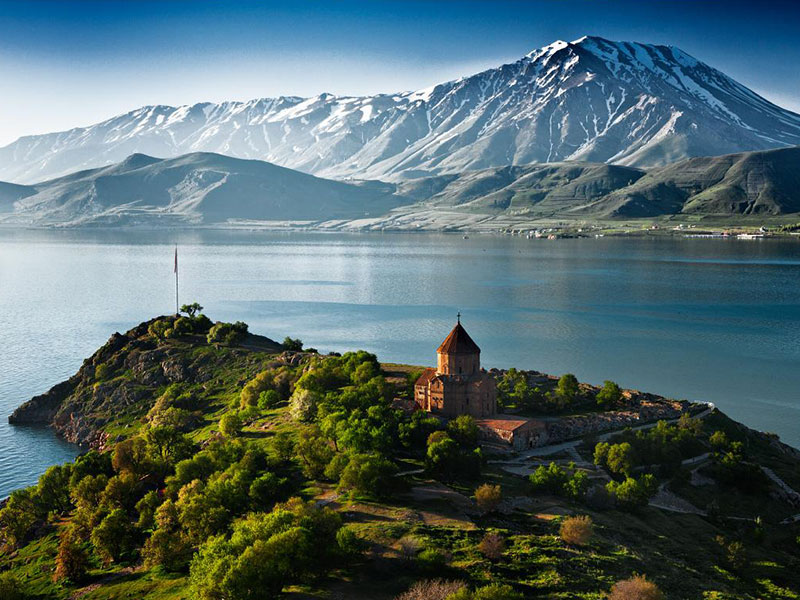
(20 mi/30 km due NE): the largest body of water in Armenia and the Caucasus and one of the highest altitude fresh-water lakes in Eurasia; this is Armenia’s premiere recreation spot for hotels, dining out, sunbathing, swimming, boating, wind-surfing, and jet-skiing. Home to the Sevanavank Monastery on the Sevan peninsula, the Lake Sevan area also features the Soviet-era Guesthouse of the Armenian Writers’ Union where famous writers such as Jean-Paul Sartre and Simone de Beauvoir once vacationed. Ruins of historical castles and fortresses and prehistoric petroglyphs also populate the area.
Ask us about organizing day trips
to Lake Sevan.
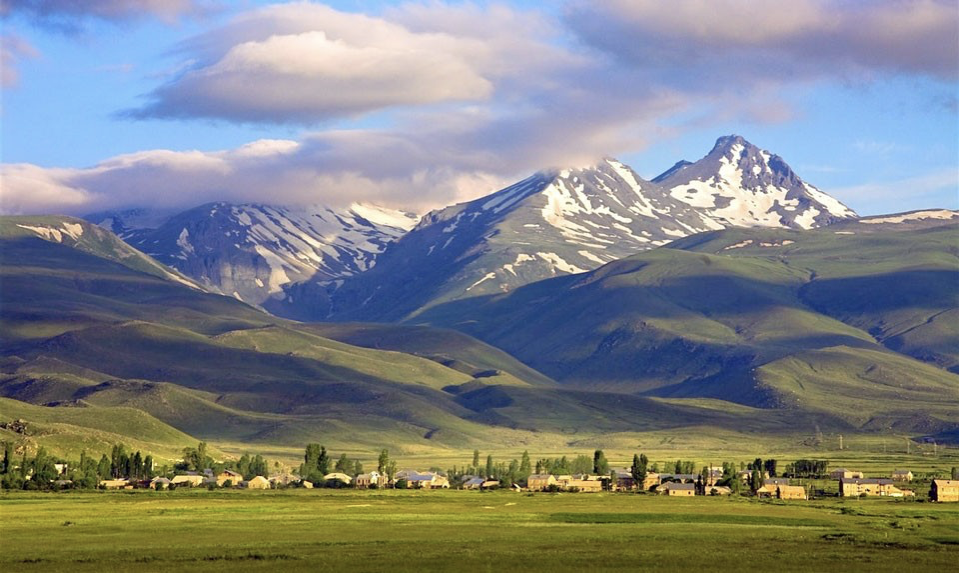
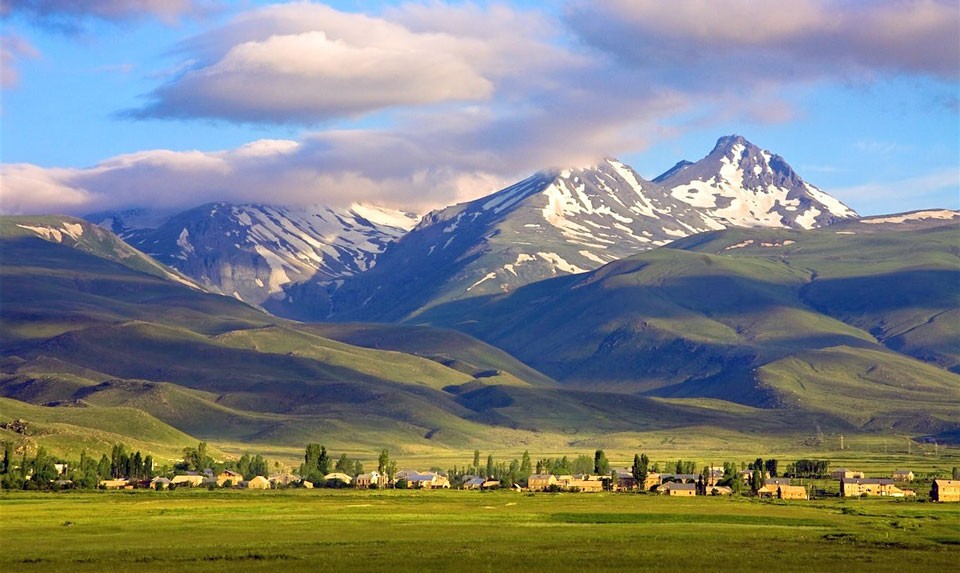
Mount Aragadz
(+12k feet/+4 km elevation and lake near a peak): regionally second in height only to the Biblical and historic Armenian mountains of Ararat, Mt. Aragadz is an isolated, four-peaked volcano mountain mass and is surrounded by Kasagh River to the East and Akhurian River to the West. The name Aragadz refers to the legendary Armenian hero, Ara the Fair. Mt. Aragadz is a popular hiking destination among locals and tourists. The southern, lowest peak is the most visited one. The hiking trail is approximately 5 kilometers long, and it typically takes between 2.5 and 3 hours to complete.
Ask us about hiking excursions to Mt Aragadz.
Khor Virab and Mount Ararat
(1 hour drive from Bjni; elevation of the “Great Ararat” peak is 16,854 ft (5,137 m) while elevation of “Little Ararat’s” peak is 12,782 ft (3,896 m): Khor Virab (meaning “deep dungeon” in Armenian) is a monastery located in the Ararat Plain in present-day Armenia, near the border with historic Armenia (present-day Turkey), about 5 miles (8 km) south of Ardashad in the Ararat Province.
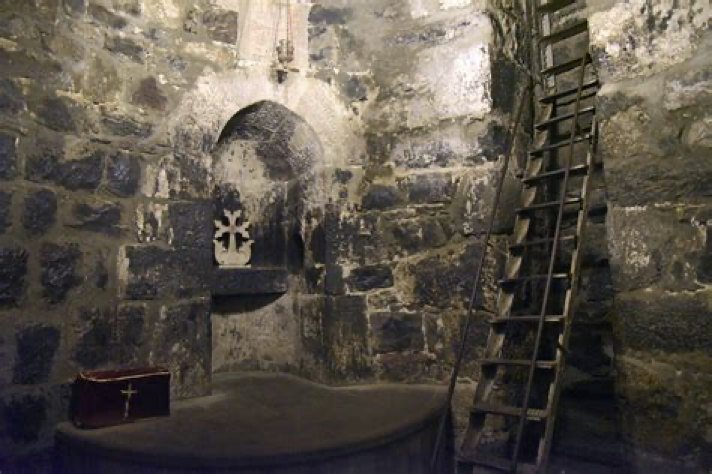
Khor Virab is the preeminent and most sacred pilgrimage site in Armenia. First recorded by historian Agathangelos in the fifth century, the Armenian patron saint Gregory the Illuminator (Krikor Lousavorich in Armenian) was imprisoned here for 13 years by King Tiridates III of Armenia for standing firm in his Christain faith and refusing to practice pagan rituals. After curing the King of illness, Gregory was released from prison, became the king’s religious mentor and ushered Christian doctrine into Armenia. In the year 301, Armenia was the first country in the world to be declared a Christian nation. Anyone who visits Khor Virab can descend into the dungeon which, in modern times, contains a consecrated altar.
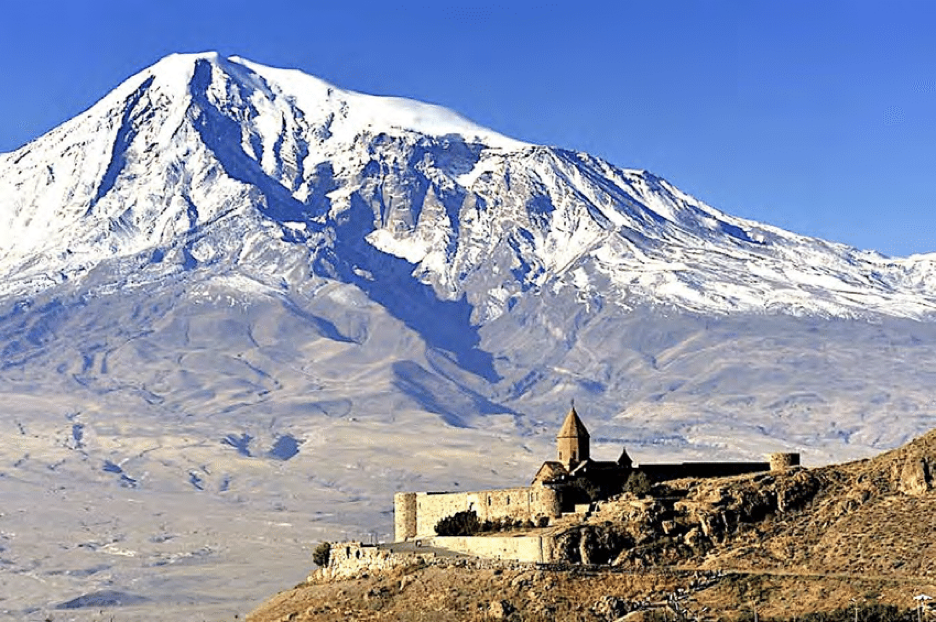
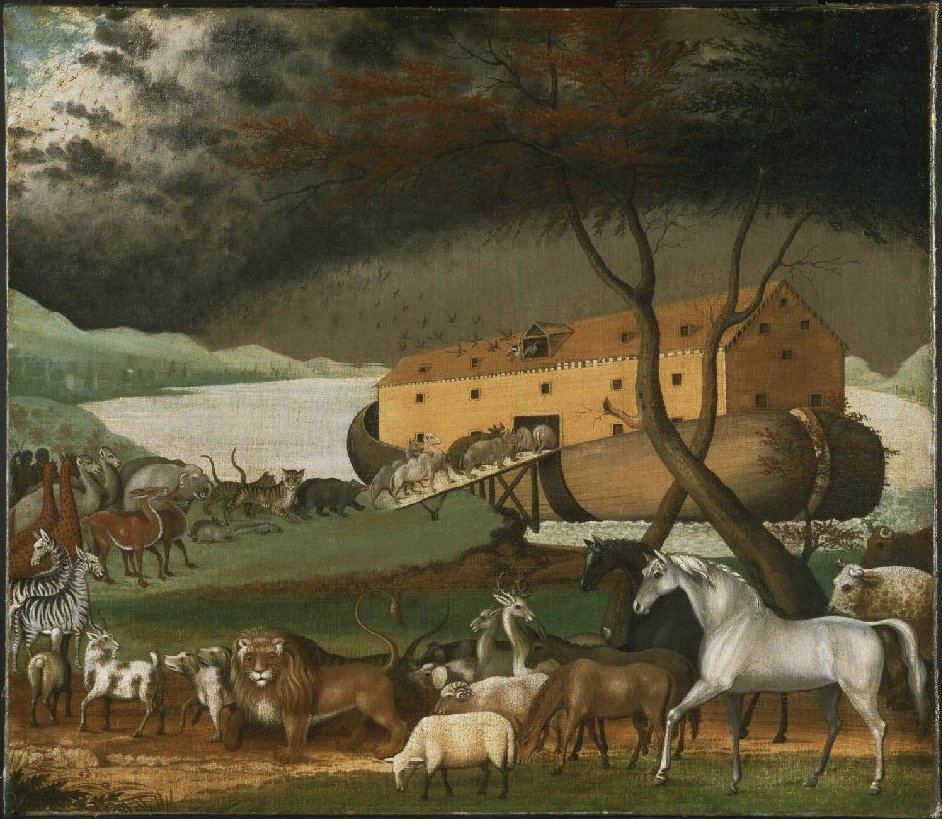
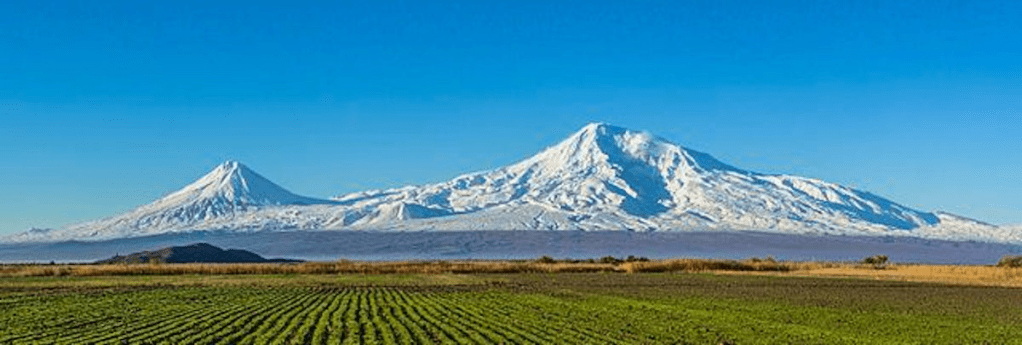
The Biblical Mt. Ararat (called Massis in Armenian) is a snow-capped, dormant volcano located in historic Armenia, now within the borders of present-day Turkey. This is where Noah’s Ark is said to have come to rest after the Great Flood. Despite lying outside the borders of modern Armenia, Ararat has historically been associated with Armenia. As a result, Armenia is referred to as “The Land of Noah” and Armenians are called the “People of Ararat.” Right up until today, this mountain is uniformly considered Armenia’s national symbol. It consists of two major volcanic cones: Greater Ararat and Lesser Ararat. Greater Ararat is the highest peak in “The Armenian Highland.” According to the Book of Genesis of the Old Testament, Noah’s Ark landed on the “mountains of Ararat.” Many historians and Bible scholars state that “Ararat” is the Hebrew name of Urartu, the Iron Age kingdom centered around Lake Van in the Armenian Highlands. The phrase is translated as “mountains of Armenia” (montes Armeniae) in the Vulgate.
Ask us about excursions to Khor Virab and Mt. Ararat.

The fragment of Noah’s Ark, collected by Patriarch St. Hakob (Jacob) of Mts’bna who ascended the mountain in the fourth century, is among the treasures exhibited at the Etchmiadzin Cathedral Museum of Armenia. (Also in the Cathedral’s holdings is the Holy Lance (a.k.a. Spear of Destiny) which pierced the body of Christ on the Crucifix, along with many relics belonging to early Christian saints.)
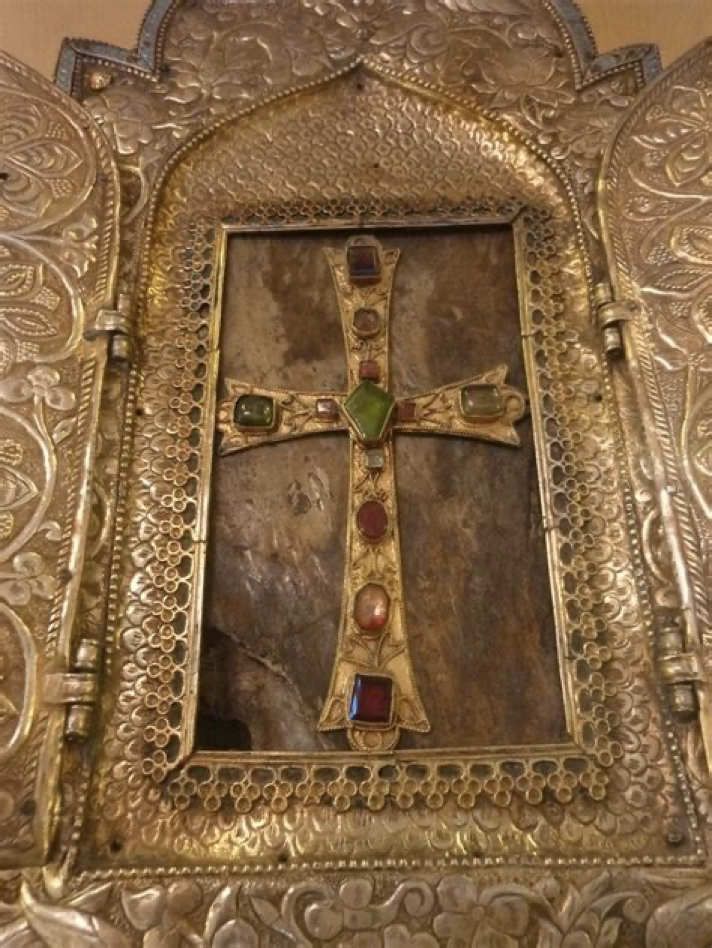
Ask us about excursions to the Etchmiadzin Cathedral
and Museum.
For centuries, Armenians made regular pilgrimages to the Ark to worship there and remove portions of the Ark’s wood to use as talismans. Eventually the Ark became entirely buried by ice and snow. In 1840, a massive earthquake opened up a crater in the upper regions of Ararat. Since then, there have been many sightings of the Ark.
The 1920 editorial cartoon below about Noah’s Ark and Mt. Ararat was drawn during the Turkish Genocide of Armenians, Assyrians and Greeks.
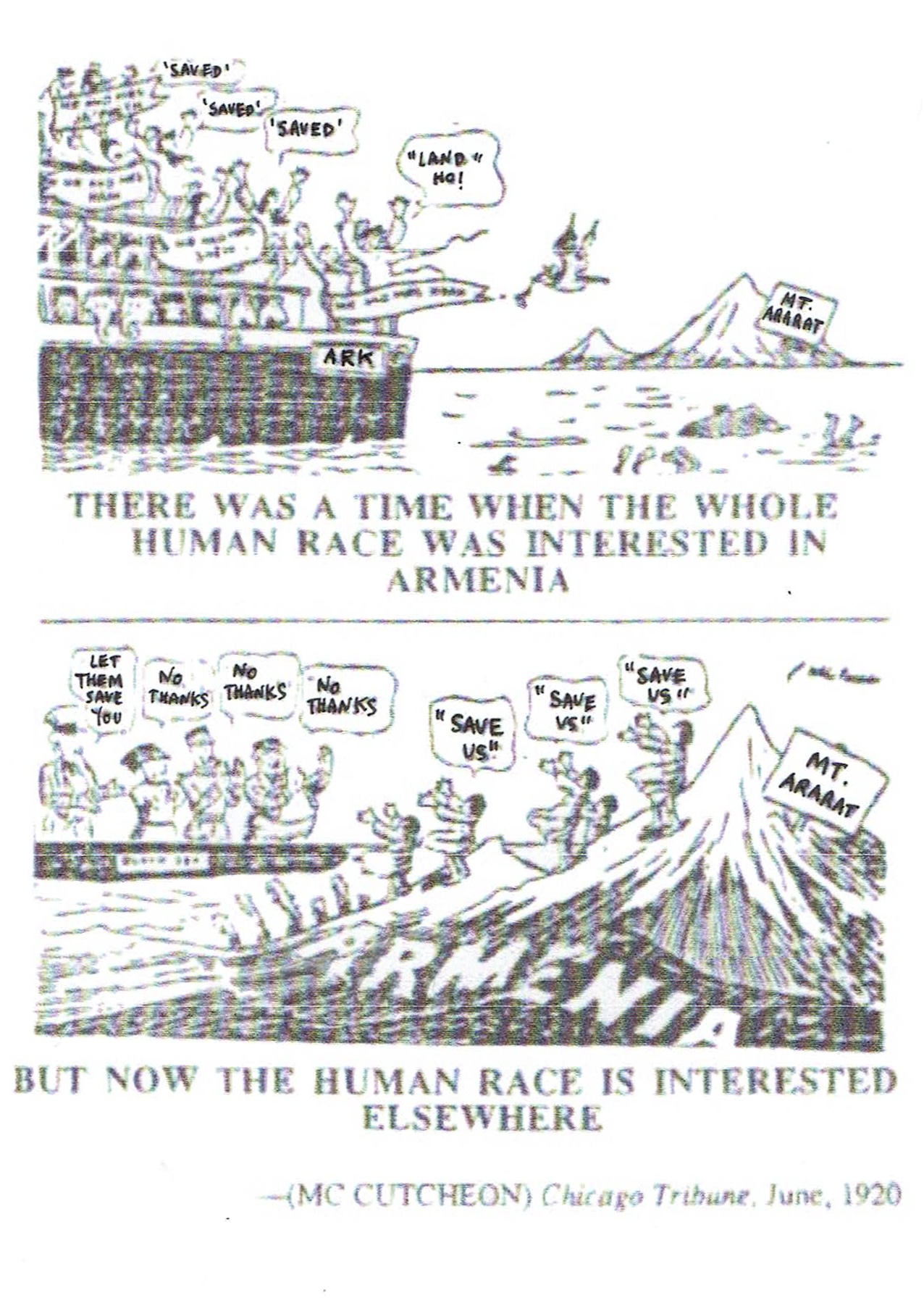
It depicts early humanity aboard Noah’s Ark spying Mt. Ararat on the horizon and exclaiming “We have been saved!” In the image below it, the artist shows how, in modern times, the beleaguered Peoples of Ararat have begged for salvation only to be rebuffed by the world. That, unfortunately, is a recurring theme right up until today.
Below is a map of Armenia through the ages.

 www.campbjni.com